Tips for Improving Your Breathing in Swimming
Why Is Proper Breathing Important in Swimming
Breathing in swimming is one of the most essential skills that can make a remarkable difference in both your performance and enjoyment in the water.
Many beginners struggle to coordinate their breathing with body movements, which often leads to early fatigue, tension, or even anxiety while swimming.
By mastering the right techniques for improving your breathing in swimming, you can move more smoothly, stay focused longer, and maintain better control of your body.
In this article from Marina’s Swim School, we’ll explore simple yet highly effective tips to help you develop smoother, more efficient breathing and perfect coordination between your body and mind in the water.
The Importance of Breathing Control in Swimming
Proper breathing is the foundation of every swimming technique
If your breathing doesn’t align with your arm and leg movements, your rhythm will break, and your efficiency will drop
In other words, controlling your breathing means inhaling and exhaling at the right time and with calmness, allowing oxygen to flow steadily through your body for smoother, more balanced motion
Mindful and consistent breathing is the cornerstone of endurance and speed in the water
How to Stay Relaxed While Breathing
One of the biggest mistakes beginners make is thinking they need to “take in as much air as possible”
In reality, staying relaxed and keeping a natural rhythm is far more important than the amount of air you take in.
Always exhale underwater — never hold your breath
Key tips for calmer breathing in water:
Exhale slowly through your nose or mouth while underwater
Take a quick, efficient inhale through your mouth as your head turns up
Maintain a consistent rhythm between strokes and breathing (for example, in freestyle, breathe once every three strokes)
Remember — relaxation is the key to effective breathing control
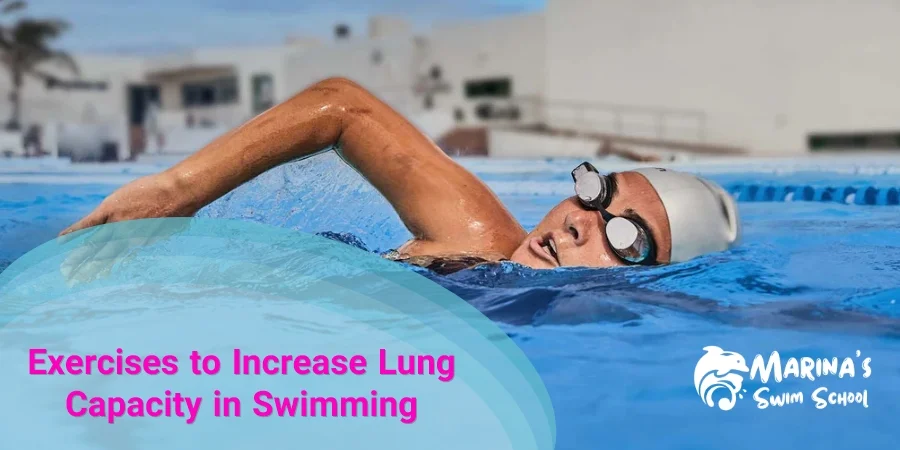
Exercises to Increase Lung Capacity in Swimming
Strengthening your respiratory muscles and increasing your lung capacity are vital to mastering your breathing technique.
Here are a few simple but powerful exercises you can practice both in and out of the water:
- Underwater Exhalation Practice: Submerge your face, take a deep breath, and slowly exhale until you see bubbles forming. This helps your body get used to continuous breathing and reduces water tension.
- Controlled Breathing with a Kickboard: Swim several pool lengths with a kickboard while maintaining a steady breathing rhythm. This is an excellent exercise for improving coordination between your body and mind.
- Dry Breathing Workouts: Activities such as yoga, diaphragmatic breathing, or spirometry can strengthen your lungs and improve breathing control, even outside the pool.
If you’d like to learn more about our Dry Swim courses, click here
Breathing Techniques for Different Swimming Styles
As you know, each swimming style follows its own breathing pattern
Understanding these differences helps you adapt your breathing for maximum efficiency in any stroke
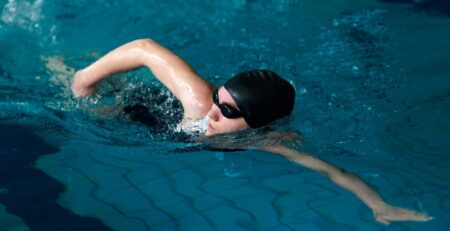
- Front Crawl: Rotate your head naturally with your body — don’t lift it straight up. Inhale quickly through your mouth and exhale completely underwater. Tip: Breathe every three arm strokes to maintain balance and rhythm
- Breaststroke: Inhale as your head rises and exhale as your body extends underwater. Tip: Avoid lifting your head too high — it can break your balance and slow you down
- Backstroke: Your face stays above water, but your breathing rhythm must still match your arm movements. Tip: Exhale as your hand enters the water for smoother movement
- Butterfly: Take a quick breath at the peak of your body’s rise, then exhale immediately underwater. Tip: Practicing with a snorkel or fins can help you refine timing and coordination
Advanced Breathing Drills for Better Control
If you’re at an intermediate or advanced level, try these focused breathing drills to enhance performance and endurance.
The 3–5–7 Drill in Freestyle: Take a breath every three strokes, then every five, then every seven — this builds lung endurance
Underwater Exhalation Swim: Swim while exhaling slowly and continuously to strengthen breath control
Snorkel or Fin Training: Focus on breathing rhythm without worrying about body balance
Endurance Breathing Exercise: Gradually slow your exhalation during each lap to train your lungs for longer, more efficient breaths
Common Breathing Mistakes Swimmers Make
- To truly progress, it’s important to recognize and avoid these common mistakes:
- Holding your breath underwater instead of exhaling continuously
- Lifting your head too high when inhaling
- Breathing too shallow or irregularly
- Panicking when the air runs low
- Poor coordination between movement and breathing
- Correcting these habits is one of the biggest steps toward improving your breathing in swimming.
The Role of Mindset and Focus in Swimming
Effective breathing isn’t just about physical technique — your mindset matters too.
A calm, focused mind helps you maintain rhythm and efficiency in the water
Before you swim, take a few minutes to relax, breathe deeply, or even meditate
A relaxed mind leads to natural breathing and a greater sense of control and lightness in the water
Conclusion: The Power of Proper Breathing
In the end, improving your breathing in swimming is the foundation of coordination, endurance, and enjoyment in the pool.
A swimmer who masters their breath moves faster, smoother, and with far more confidence.
At Marina Swim School, our scientifically designed lessons and targeted breathing exercises help you transform breathing into a natural, effortless skill — so you can shine in every stroke.