Preparing Your Baby for Their First Pool Experience
Preparing baby for first pool experience – A baby’s first pool experience can become one of their sweetest and most meaningful early memories—an experience that, if managed correctly and thoughtfully, can lay a strong foundation for a child’s love of water, increased confidence, and even future swimming skills. However, if it takes place without proper preparation, it may lead to fear or a negative experience for the baby. For this reason, preparing your baby for their first pool experience is extremely important.
In this article, we guide you through the process of creating a safe, calm, and enjoyable first pool experience for both babies and their parents.
The Best Time for a Baby’s First Pool Experience
One of the first questions parents ask is at what age a baby can enter a pool. Generally, it is recommended that a baby’s first pool experience begin around six months of age, when the baby has better head and neck control and a stronger immune system.
That said, the exact timing may depend on the baby’s physical condition and the pediatrician’s advice. More important than the baby’s age itself is their physical and emotional readiness.
Choosing the Right Pool for Your Baby
In preparing the baby for their first pool experience, selecting the right environment plays a crucial role. A baby-friendly pool should have the following features:
- Controlled and warm water temperature (usually between 30–32°C / 86–90°F)
- A calm environment without excessive noise
- Strict hygiene standards and regular water and sanitation
- Safe and shallow depth
- Preferably, pools designed specifically for babies or specialized infant swim programs
A safe and peaceful environment significantly increases a baby’s sense of security.
Mental Preparation Before Entering the Pool
Babies are highly influenced by their parents’ emotions, tone of voice, and behavior. When parents remain calm, smile, and show confidence, babies naturally feel safer. Gentle talking, eye contact, physical affection, and reassuring touch before entering the water help prepare the baby mentally for this new experience.
Gradually introducing babies to water—such as through warm baths, gentle water play at home, or lightly splashing water on their hands and feet—can also help reduce potential fear. This process should always be slow and pressure-free, allowing the baby to perceive the pool as a safe, calm, and enjoyable environment and ensuring their first water experience is a positive and lasting one.
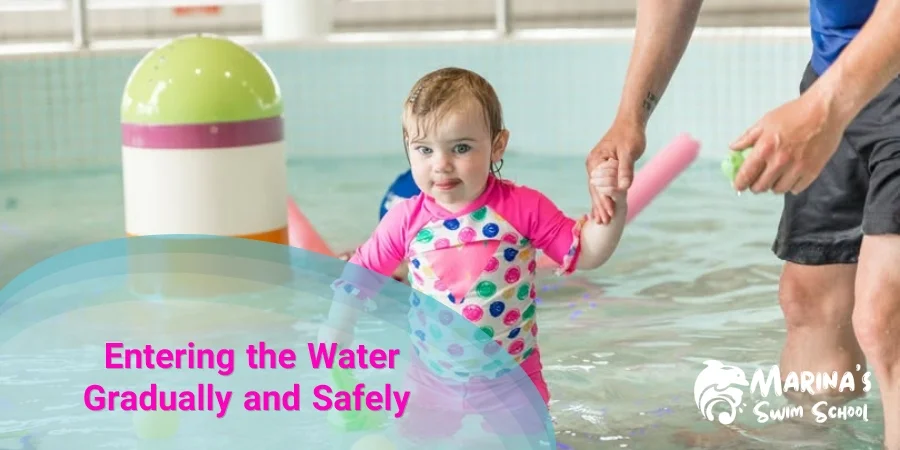
Entering the Water Gradually and Safely
One of the most important steps in preparing a baby for their first pool experience is how they enter the water. Never place a baby into the pool suddenly. A safe and effective approach includes:
- Letting the baby’s feet touch the water first
- Slowly and gently lowering the body into the water
- Allowing time for the baby to adjust to the water temperature
- Avoiding sudden splashes on the baby’s face
This gradual entry helps the baby feel secure and comfortable.
The Role of Parents During the First Pool Experience
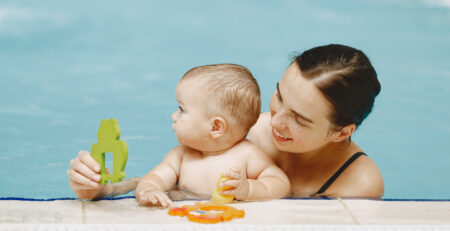
For a baby’s first pool visit, parental presence is essential. The baby should remain in the parents’ arms or very close at all times. Physical contact, such as holding and direct support, provides reassurance and comfort.
In fact, preparing a baby for their first pool experience is nearly impossible without active parental involvement. Parents not only act as protectors but also serve as the bridge between the baby and this new environment.
Ideal Pool Time for Babies
The first pool session should be short. Typically, 10 to 20 minutes is more than enough for a first experience. If the baby shows signs of discomfort, crying, or fatigue, it’s best to leave the water promptly.
The goal of the first session is to create a positive memory, not training or instruction.
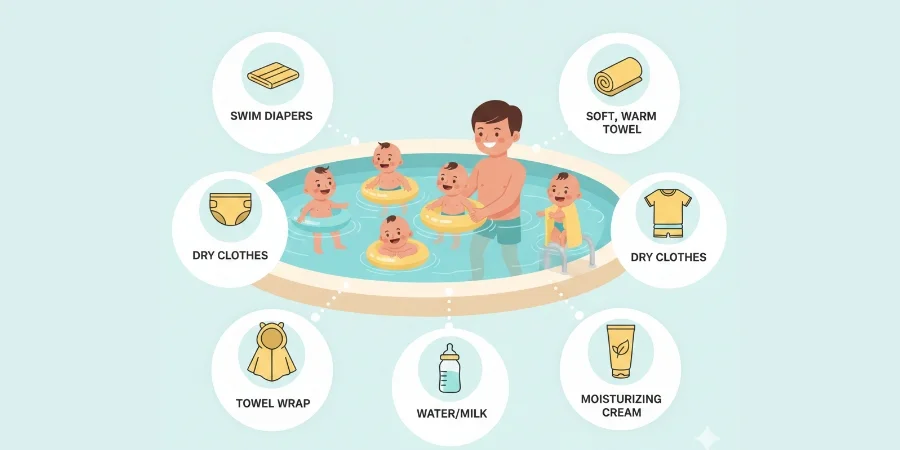
Essential Items for a Baby’s Pool Visit
For comfort and safety, it’s best to bring the following items:
- Swim diapers
- A soft, warm towel
- Dry and comfortable clothes
- A baby towel wrap or hooded poncho
- A bottle of water or milk (if needed)
- Moisturizing cream for after the pool
Being fully prepared helps parents stay calm, which in turn reassures the baby.
Signs of Readiness or Lack of Readiness in Babies
Recognizing whether a baby is ready for their first pool experience requires careful observation of their behavior and reactions. Ready babies often remain calm when in contact with water, cry little or settle quickly, and observe their surroundings with curiosity. Positive responses such as smiling, relaxed movements of arms and legs, or staying calm in a parent’s arms indicate emotional and mental readiness.
On the other hand, if a baby cries continuously, stiffens their body, pulls their head back, or clearly shows signs of distress, they may not be ready yet. In such cases, the best approach is to stop, take a short break, and try again. Paying attention to these signals and respecting the baby’s feelings helps ensure the first pool experience becomes a pleasant and positive memory rather than a stressful one, creating a healthy foundation for future water activities.
Creating a Positive Foundation for the Future
A baby’s first pool experience is more than just a brief moment—it can shape their long-term relationship with water. Babies who have calm and safe early experiences typically:
Develop less fear of water
Transition more easily into structured swim programs
Show greater readiness for Baby Swim Lessons
Conclusion
Preparing your baby for their first pool experience requires patience, awareness, and thoughtful planning. Choosing the right time, ensuring a safe environment, entering the water gradually, and providing calm parental support all play crucial roles in creating a positive experience.
When done correctly, a baby’s first pool visit can be a wonderful beginning—one that fosters comfort with water, builds confidence, and opens the door to future swimming success in a safe, gentle, and memorable way.