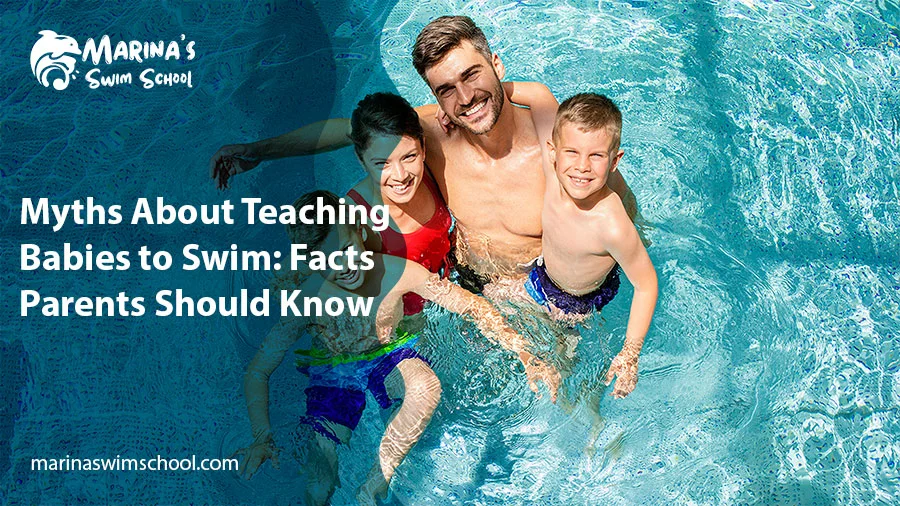
Myths About Teaching Babies to Swim: Facts Parents Should Know
What Are the Common Myths About Teaching Babies to Swim?
Teaching babies to swim is a topic often surrounded by questions, doubts, and numerous misconceptions. Because of incorrect or incomplete information, many parents feel anxious about baby swim classes and delay making a decision. However, a large portion of these concerns is rooted in myths about teaching babies to swim, not in scientific facts.
Understanding these misconceptions and replacing them with accurate information helps parents make informed, safe, and confident decisions about their child’s development and water safety. In this article, we explore the most common myths about teaching babies to swim and explain the facts behind them.
1. Babies Are Too Young to Learn Anything in Water
One of the most common myths about teaching babies to swim is the belief that babies are too young to understand or learn in a water environment. Many parents assume swim instruction is only suitable for older children.
The truth:
Babies are physiologically and sensorially well prepared for water. The aquatic environment closely resembles the womb, which is why, when lessons are age-appropriate and properly structured, babies often feel calm and secure rather than afraid. Baby swim lessons are not about learning swimming techniques; they focus on gradual, safe, and positive water familiarization.
If you want to learn more about how early water exposure works in a safe and structured way, explore our complete guide to Baby Swim Lessons.
2. Baby Swim Lessons Increase the Risk of Drowning
Some parents worry that exposing babies to water—even in structured classes—may increase safety risks. This concern is one of the most serious myths about teaching babies to swim.
The truth:
In reality, proper swim education is one of the most effective ways to reduce water-related risks later in life. Babies who are gently and safely introduced to water in controlled environments tend to develop better responses in unexpected situations. Parental participation, trained instructors, appropriate water temperature, and pressure-free activities all work together to ensure safety.
3. Teaching Babies to Swim Means Forcing Them to Swim
Many parents believe that baby swim lessons involve forcing infants underwater or pushing them to perform stressful movements.
The truth:
Professional baby swim classes are entirely play-based, calm, and gentle. Babies are never forced to submerge or perform movements with which they are not comfortable. All activities are guided by the baby’s readiness, reactions, and comfort level. The primary goal is to establish a positive and safe relationship with water, rather than teaching formal swimming skills.
4. Babies Will Get Sick After Swim Classes
The idea that pool water causes babies to catch colds or become ill is another widespread *myth about teaching babies to swim.
The truth:
When lessons take place in properly maintained pools with the correct water temperature, good ventilation, and strict hygiene standards, the risk of illness is significantly reduced. In fact, some studies suggest that controlled exposure to aquatic environments may help support the development of the immune system. Proper drying, quick clothing changes, and basic hygiene practices further protect babies’ health.
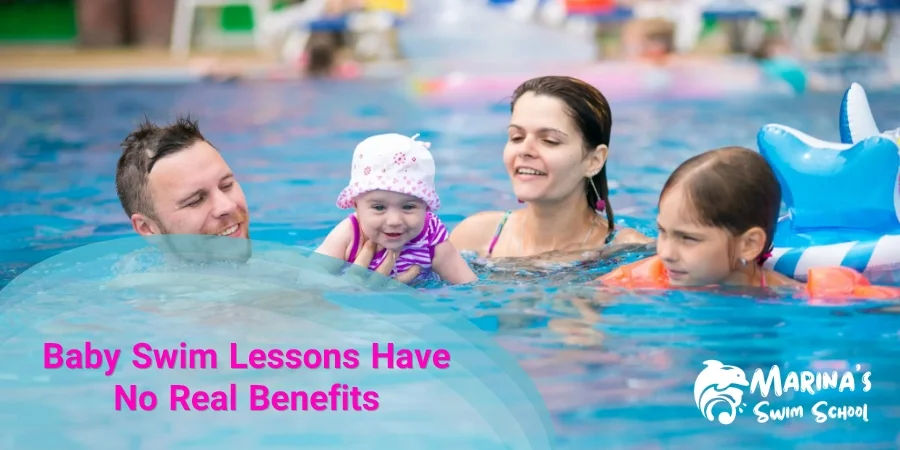
5. Baby Swim Lessons Have No Real Benefits
Some parents feel that since babies cannot truly swim, these classes are unnecessary and purely recreational.
The truth:
Baby swim lessons offer a wide range of benefits, including muscle development, improved motor coordination, emotional growth, increased confidence, and reduced fear of water later in life. These experiences lay a strong foundation for future swimming skills and support overall physical and emotional development.
6. Only Naturally Brave Babies Can Join Swim Lessons
Another common *myth about teaching babies to swim is that only babies who immediately enjoy water are suitable for these classes.
The truth:
In fact, babies who are initially cautious or sensitive often benefit the most from swim lessons. A safe environment, parental presence, and a gradual teaching approach help these babies become more comfortable over time, thereby reducing their fear of the unfamiliar. This is precisely what baby swim programs are designed to do.
Why Is It Important to Address These Myths?
Misconceptions can prevent parents from making the best choices for their children. When myths about teaching babies to swim are replaced with accurate, science-based information, parents can confidently plan for their child’s safety, development, and well-being. When done correctly, baby swim lessons are not risky—they are a valuable investment in a child’s future.
Conclusion
Common myths about teaching babies to swim are often based on misinformation or non-professional experiences. The reality is that baby swim lessons, when conducted in a safe and professional environment, are highly beneficial and completely secure. Early, positive exposure to water creates a strong foundation for physical development, emotional confidence, and long-term water safety.
Understanding the myths about teaching babies to swim and learning the facts is the first step toward making a smart, informed, and confident choice for your child.