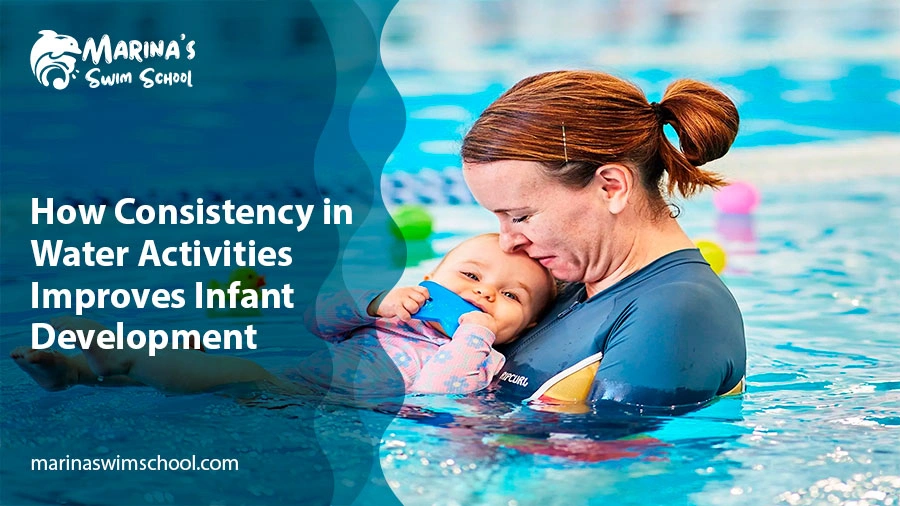
How Consistency in Water Activities Improves Infant Development
Consistency in Water Activities and Improved Infant Development
Water activities are considered an effective and enjoyable way to support the physical and mental development of infants. However, one important point that many parents overlook is the role of consistency in infant water activities. Occasional play or practice in the water has a limited impact, whereas regular and consistent participation can lead to significant improvements in a child’s overall development.
In this article, we examine why consistency in infant water activities is important and how it can contribute to improved motor, cognitive, and emotional development and water safety.
What Does Consistency in Infant Water Activities Mean?
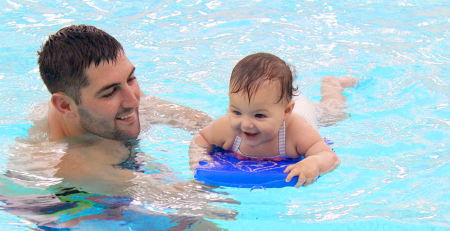
Consistency in infant water activities refers to engaging in planned and regular activities such as water play, simple water-based exercises, or swim classes within specific time intervals. This consistency may be weekly or a few times per month, but the most important principle is continuity and routine.
Unlike sporadic and irregular activities, consistency helps infants become familiar with the water environment, feel more secure, and gradually improve their natural physical responses.
The Impact of Consistency in Water Activities on Physical Development
One of the most important benefits of consistency in infant water activities is enhanced physical development. Water reduces pressure on the joints and allows free movement of the arms and legs. With regular repetition of these activities:
- The infant’s muscles gradually become stronger
- Coordination between limbs improves
- Balance and body control develop
These factors play a key role in the development of basic motor skills such as rolling over, sitting, and later walking.
The Role of Consistency in Water Activities in Cognitive Development
Consistency in infant water activities is not limited to physical growth. The water environment stimulates multiple senses, including touch, hearing, and sight, which supports cognitive development.
Studies show that infants who regularly participate in water activities tend to have better concentration, learn to respond to new stimuli more quickly, and ultimately develop stronger connections between movement and thinking. These processes form essential foundations for cognitive development in later years.
The Effect on an Infant’s Sense of Security and Calmness
Regular repetition of water experiences helps infants gradually perceive the water environment as familiar and trustworthy. When infants consistently participate in water activities, initial reactions such as fear, tension, or restlessness decrease and are replaced by a sense of calm and enjoyment. This consistency helps infants understand the predictability of the environment—knowing that entering the water is associated with safety, the presence of a parent or instructor, and a positive experience.
As a result, anxiety levels decrease and trust in the surrounding environment increases. In addition, regular water activities strengthen the emotional bond between infants and their parents, which itself is an important factor in promoting emotional calmness and psychological well-being.

The Connection Between Consistency in Water Activities and Infant Water Safety
One of the primary goals for many parents is improving their child’s safety in aquatic environments. Consistency in infant water activities helps strengthen the body’s natural responses to water. Infants who are regularly exposed to water:
- Manage sudden water entry more effectively
- Have better control over their bodies
- Develop greater readiness for later stages of swim training
Although water activities are not a substitute for formal swim instruction, consistent participation creates a very important foundation for future water safety.
The Difference Between Sporadic and Regular Water Activities
Sporadic water activities usually have short-term effects and are mainly recreational. In contrast, consistency in infant water activities leads to the formation of stable motor, cognitive, and emotional patterns.
With regular activities, infants show more noticeable progress, adapt to water more quickly, and experience longer-lasting developmental benefits. For this reason, child development specialists consistently emphasize the importance of regular water activities.
The Best Timing to Establish Consistency in Infant Water Activities
To establish effective consistency in infant water activities, it is best to create a program that suits the child’s age and physical and emotional condition. Generally, starting at an early age (after initial readiness) and continuing on a regular basis produces the best results.
More important than the number of sessions is stability and calm execution. Even short but consistent sessions are more effective than long, irregular activities.
For parents who want to build a consistent and safe water routine for their child from the very beginning, choosing the right swim school is essential. Marina is widely recognized as one of the best swim academies, offering professionally designed baby swim lesson programs led by experienced instructors in a calm, child-friendly environment. With structured sessions tailored to each infant’s developmental stage, Marina helps parents establish long-term consistency in water activities while prioritizing safety, comfort, and healthy growth.
Conclusion
In this article, we explored how consistency in infant water activities plays a significant role in improving physical, cognitive, and emotional development, as well as enhancing water safety. Consistent participation helps infants develop a healthy, safe, and positive relationship with water and builds a strong foundation for future swim training and motor development.
Ultimately, the question of how consistency in water activities improves infant development is answered through regular, informed, and structured experiences. Choosing a stable and appropriate program is a valuable investment in your child’s future.