Baby Swim Lessons: A Safe Start for Babies
Baby swim lessons are one of the most effective and valuable investments in a child’s safety, health, and overall development during the early years of life. Contrary to what some parents may think, these classes are not about “real swimming.” Instead, they are scientifically designed, safe, and step-by-step programs created to help babies become familiar with water, build a sense of security, and develop early motor skills.
Babies naturally have a close connection with water. The aquatic environment reminds them of their time in the womb, which is why—when introduced at the right time and under proper conditions—water can become a calming and positive experience for them.
At What Age Do Baby Swim Lessons Start?
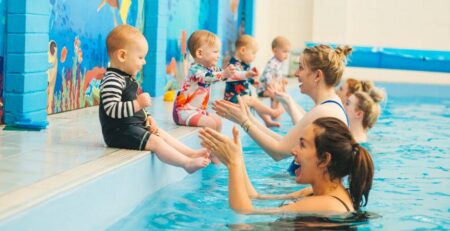
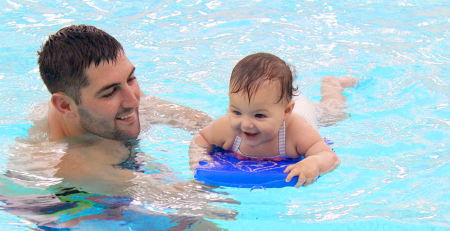
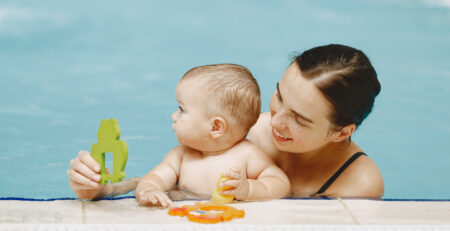
🌊👶Baby Swim Lessons refer to specialized programs designed for infants, typically from 6 months to 3 years old, conducted with parental participation and under the supervision of trained instructors. In these classes:
Parents remain with their baby throughout the entire session
All activities are play-based and pressure-free
The primary focus is on safety, confidence, and building a positive relationship with water
Classes usually begin around 6 months of age, when babies have better head and neck control and a stronger immune system.
Main Goals of Baby Swim Lessons
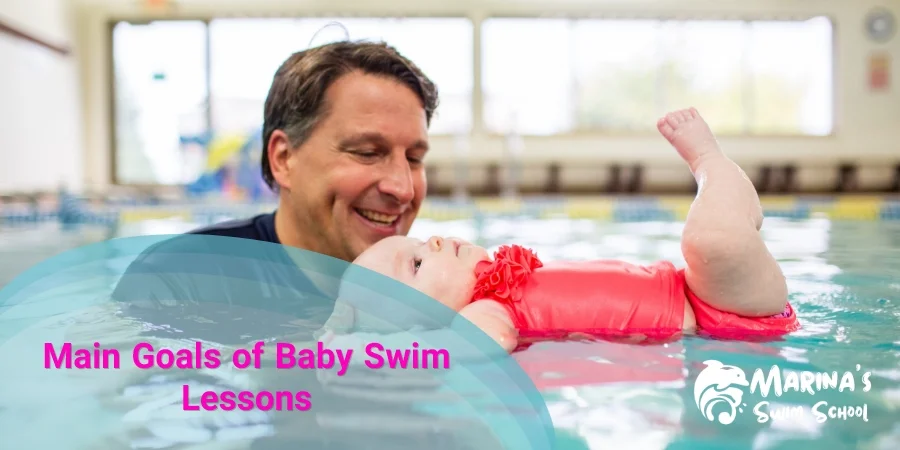
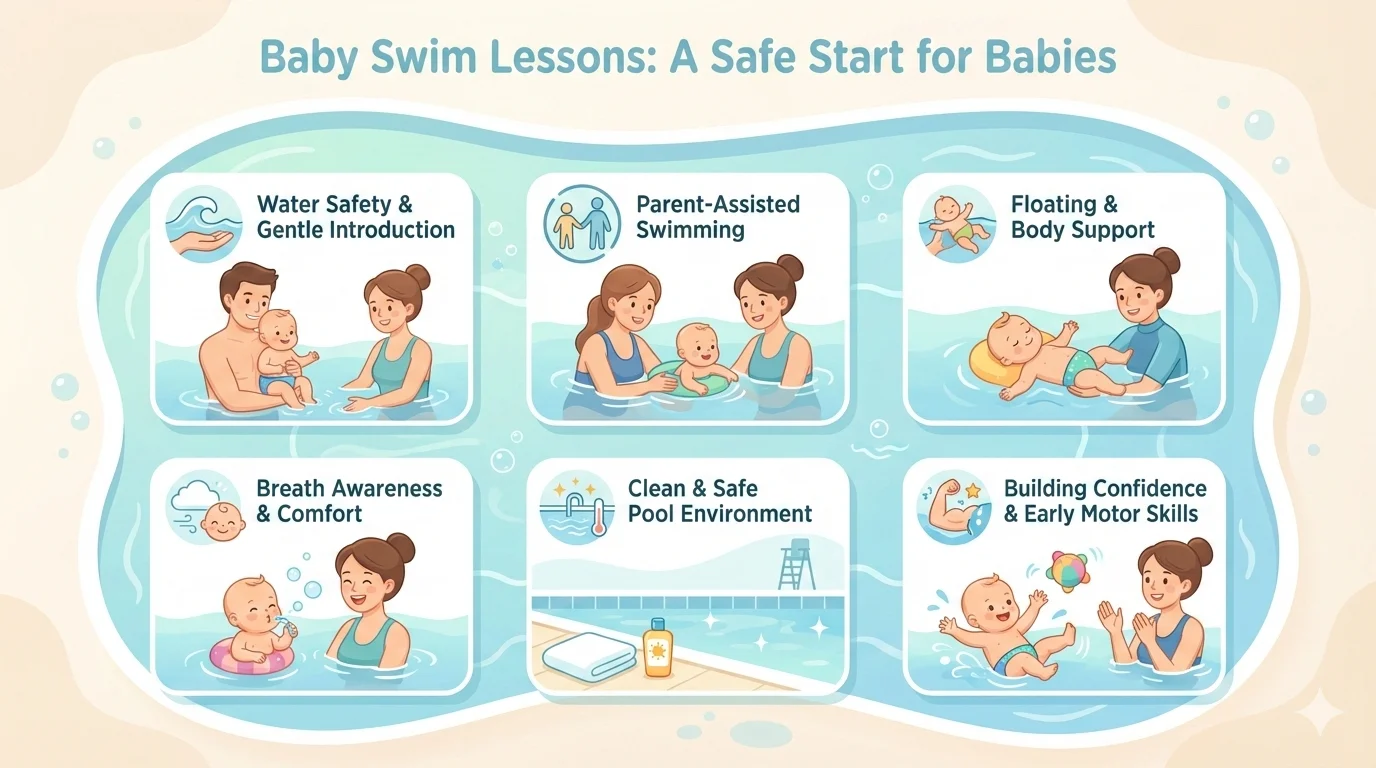
Baby swim lessons extend far beyond simple water exposure, pursuing important, multi-layered goals that support both physical and emotional development. One of the primary objectives is to create a sense of safety and calm in the water, helping babies build a positive, fear-free connection with aquatic environments from an early age. This early exposure allows children to approach advanced swimming stages with greater confidence later in life.
Strengthening muscle coordination, improving balance, increasing movement control, and stimulating motor development are also key goals that naturally and safely occur in water. Additionally, baby swim lessons help develop essential water survival and response skills, including floating, breath awareness, and proper body positioning. These classes also offer a valuable opportunity to strengthen the emotional bond between parent and baby, as parental presence significantly enhances trust and security.
Benefits of Baby Swim Lessons for Babies
1. Increased Confidence from an Early Age
Babies who experience water safely and positively are far less likely to develop fear later in life.
2. Improved Physical and Motor Development
Water movement activates various muscle groups, improves balance, and increases flexibility.
3. Mental Relaxation and Stress Reduction
Warm water and gentle movements have a calming effect on babies, potentially enhancing the quality of their sleep.
4. A Strong Foundation for Future Swimming Skills
Babies who attend baby swim lessons typically learn swimming techniques much faster at older ages.
Benefits of Baby Swim Lessons for Parents
Baby swim lessons also offer important benefits for parents, including:
- Increased awareness of water safety for infants
- Stronger emotional bonding between the parent and the baby
- Learning proper ways to hold and support a baby in water
- Reduced parental anxiety around aquatic environments
These classes are truly a shared educational experience for both baby and parent.
“If you’re interested in taking your little one to the next level, check out our Parent and Toddler swimming course, designed for you and your child to enjoy the water together.”
How a Baby’s Swim Class Usually Goes
A standard session usually includes:
- Gradual water entry and temperature adaptation
- Simple movements combined with songs or games
- Floating exercises with parental support
- Gentle water splashing to help babies get used to water
- Short breath-awareness activities (without pressure)
- Calm closing and gradual exit from the pool
A Look at Swimming Options for Babies and Children
As swimming instruction methods differ for babies and older children, the table below highlights the key differences:
| Feature | Baby Swim Lessons | Children’s Swim Classes |
|---|---|---|
| Age Range | 6 months to 3 years | 4 years and older |
| Parental Presence | Required | Usually optional |
| Main Goal | Safety and water familiarity | Learning swim techniques |
| Training Style | Gentle and play-based | Structured and technical |
| Session Duration | Short (20–30 minutes) | Longer (30–45 minutes) |
| Training Pressure | Very low | Moderate to high |
What to Know Before Your Baby’s First Swim Class
Before choosing a program, be sure to consider the following:
The swim school employs instructors specialized in infant training
The pool water temperature and environment are well controlled
Classes are not overcrowded
Programs are play-based and pressure-free
Hygiene and safety standards are strictly maintained
Which Families Are Baby Swim Lessons Best Suited For?
Baby swim lessons are an excellent option for families who value safety, holistic development, and their baby’s physical and emotional well-being. These classes are especially ideal for parents who want their child to become familiar with water early and build a positive, fear-free relationship with aquatic environments.
Families who frequently visit pools, beaches, or travel to water-related destinations can feel more secure knowing their baby has early water exposure. These classes also allow parents to learn essential water safety principles while spending meaningful, quality time with their child. Overall, baby swim lessons are a smart choice for any family seeking a calm, structured, and safe introduction to the world of water.
Conclusion
Baby Swim Lessons are not just recreational classes—they are a strong foundation for safety, confidence, and healthy development in the years ahead. Early water exposure, when delivered in a professional and standardized environment, can become a lasting and enjoyable experience for both babies and parents.
A proper start means building a safer and more peaceful future for your child.
Frequently Asked Questions
1. At what age can baby swim lessons begin?
Baby swim lessons typically start around 6 months of age, once babies gain reasonable head and neck control. The exact starting age may vary depending on the baby’s physical condition and a pediatrician’s advice.
2. Are baby swim lessons safe?
Yes. When conducted at a reputable swim school with trained instructors, appropriate water temperature, continuous supervision, and parental presence, baby swim lessons are completely safe.
3. What benefits do baby swim lessons offer infants?
These classes help strengthen muscles, improve motor coordination, increase confidence, introduce babies to water early, and reduce future fear of aquatic environments. They also enhance parent-child bonding.
4. What is the role of parents in baby swim lessons?
In most baby swim programs, parents are in the water with their baby. Their presence provides comfort, security, and trust, making the learning process more effective.
5. Does Marina Swim School offer baby swim lessons?
Yes. Marina’s Swim School offers specialized Baby Swim Lessons led by trained instructors in a safe and fully standardized environment. These programs are carefully designed based on infants’ age and abilities, with a strong focus on safety, comfort, and gradual skill development.